

1、 Technological leap: Spring top needle CNC machining enters the era of medical grade precision
(1) From Microns to Life: Precision Enhancement of Spring Top Needles in Medical Applications
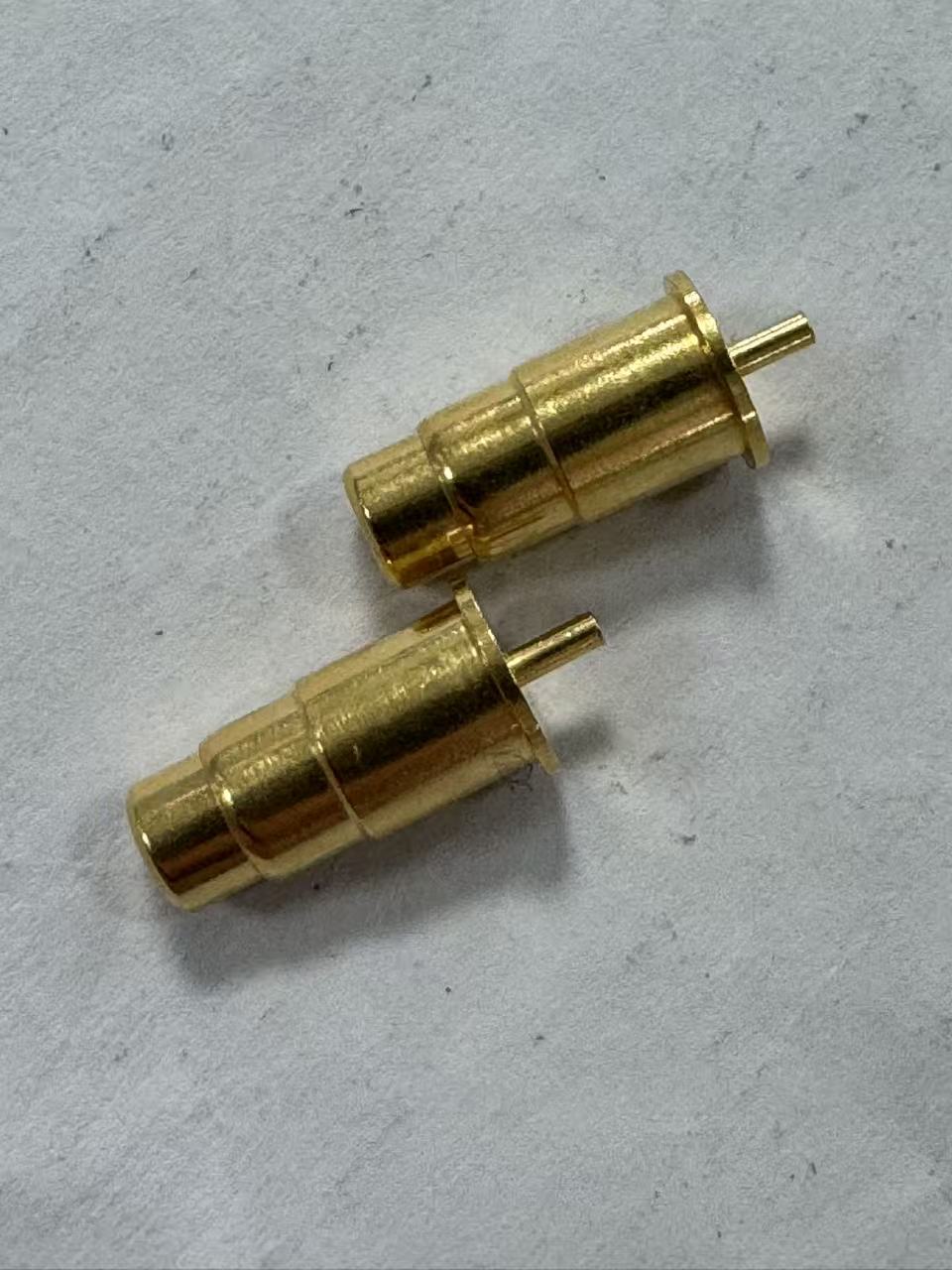
Pogo Pin is a high-precision spring type conductive connector, which is assembled by precision riveting of three core components: needle, spring, and needle tube. In the medical field, this precision component, which originally served the consumer electronics scene, is undergoing a rigorous standard leap from “consumer grade” to “medical grade” – the requirements for connectors in medical devices are not only “conductivity”, but also “zero failure”.
The entire process of precision Pogopin ejector pin machining relies on high-precision equipment such as CNC walking machines and precision automatic lathes, abandoning the traditional rough machining mode and achieving integrated precision molding of the three core components. The entire processing flow covers six core stages: precision turning, mirror polishing, vacuum electroplating, precise assembly, pressure calibration, and comprehensive testing. At the level of precision control, the ultra fine probe with ultra precision tolerance has reached the level of ± 0.003 millimeters. The finished product needs to undergo multiple rigorous tests, including 100000 cycles of expansion fatigue testing, high and low temperature cycling testing, salt spray corrosion testing, pressure consistency testing, etc., to ensure stable operation of the product in complex working conditions such as -40 ℃ to 125 ℃ wide temperature environment and high-frequency vibration.
In March 2026, the 0.1 μ m CNC imaging measuring instrument has completed full inspection and been put into operation on the medical micro component production line, covering key components such as cardiovascular stents, micro springs, and puncture needles in the first batch. This means that CNC machining of spring top pins has moved from micrometer level control to the sub micrometer era, providing unprecedented precision guarantees for medical grade high reliability connections.
(2) Medical Adaptation of Materials and Design: From Conductivity to Compatibility
The requirements for connectors in medical equipment far exceed those of ordinary electronic products. In addition to conductivity, biocompatibility, sterilization tolerance, and signal integrity have become core considerations. Phosphobronze has been widely used in precision medical monitoring equipment that requires frequent sterilization due to its elasticity and wear resistance. The electroplating scheme of precious metals such as gold, palladium, and nickel, as key raw materials, directly determines the contact resistance and corrosion resistance of connectors.
At the structural design level, the expansion and contraction characteristics of the spring top pin can ensure the reliability of the connection between the electrode plate and the host, thereby ensuring the accuracy and stability of electrocardiogram signal acquisition. The application of magnetic Pogo Pin in medical ultrasound equipment has become a core component for signal transmission and power supply due to its accurate layout and reliable magnetic performance. This “flexible connection” design not only meets the frequent insertion and removal requirements of medical equipment, but also avoids the physical damage of traditional hard connections to precision interfaces.
2、 Market Insights: The Intersection of Trillion and Billion Dollar Races
(1) The incremental password for healthcare in the global Pogo Pin market
From the perspective of the global Pogo Pin connector market, the market size is expected to reach $463 million in 2025 and is projected to increase to $737 million in 2032, with a compound annual growth rate of 7.3%. According to statistics from other institutions, the global Pogo Pin market is expected to reach a size of approximately 422 million US dollars by 2025, and is expected to continue expanding at a compound annual growth rate of 8.40%. On the application side, consumer electronics is the largest market, followed closely by automobiles and medical devices.
It is worth noting that the demand for dual row Pogo Pin in the medical electronics field is increasing year by year due to its multi contact integration and low contact resistance characteristics. It is expected that the global dual row Pogo Pin market demand will grow by 12.3% year-on-year in 2026. This growth rate far exceeds the industry average, reflecting the urgent demand for high-density and high reliability connectivity solutions in medical electronics.
(2) Medical connector market: a billion dollar “incremental blue ocean”
The global medical connector market is in a strong growth channel. The market size is expected to reach approximately 2.79 billion US dollars in 2025, and is projected to increase to 3.04 billion US dollars by 2026, with a compound annual growth rate of 8.9%. By 2030, the market size is expected to reach 4.22 billion US dollars. The Chinese medical device market is also expanding rapidly – the market size is expected to reach 973.9 billion yuan by 2025, and is expected to exceed 1017.4 billion yuan by 2026. The market for household medical devices is expected to reach 221.2 billion yuan by 2026. The continuous promotion of preventive health needs, digitalization, and artificial intelligence applications has created a huge incremental space for precision connectors.
In the segmented field, the domestic market size of probe springs (micro precision springs) is expected to reach approximately 1.87 billion yuan by 2026, with a total contribution of 640 million yuan from medical, automotive, consumer electronics, robotics, and other industries. The demand for low stress beryllium copper micro springs in medical precision equipment such as cochlear implants, pacemakers, and minimally invasive detection devices is rapidly increasing. The clinical implementation of brain computer interfaces has opened up the long-term high-end medical market, and the unit price of biocompatible material springs is much higher than that of ordinary products.
(3) Dialectical Analysis: Opportunities and Challenges Coexist
At the opportunity level, three driving forces are reshaping the market landscape: firstly, the increasing popularity of minimally invasive surgery has strengthened the demand for medical connectors – advanced systems such as endoscopes, laparoscopes, and robotic surgical platforms require safe and reliable connection solutions; Secondly, the explosive growth of portable medical devices and wearable health monitoring devices has put forward a rigid demand for miniaturized and highly reliable spring pin connectors; Thirdly, AI driven design simulation and machine vision inspection are improving the manufacturing accuracy and quality control level of medical connectors.
On the challenge level, the medical connector market is constrained by strict regulations and standards – ISO 80369 small diameter connector standard, IEC 60601 medical electrical equipment safety standard, ISO 10993 biocompatibility requirements, as well as FDA and EU MDR approval processes, all significantly raising the threshold for product design, supplier selection, and commercialization. The sterilization validation and maintainability requirements throughout the entire lifecycle have put forward standards for the material selection and structural design of spring top pins that are far higher than those of consumer electronics products.
In addition, although there is a huge space for domestic substitution – the dependence on imported high-end probe springs exceeded 75% in 2020, and the localization rate was only 46.3% in 2025- high-precision scenarios such as wafer probe cards, implantable medical devices, and military RF still heavily rely on overseas supply. How to break through the technological barriers of high-end medical connectors while maintaining cost competitiveness is a practical issue faced by domestic spring top pin manufacturers.
3、 Scene cultivation: Spring top needle technology empowers medical core systems
(1) Diagnostic equipment: the “signal bridge” of medical imaging
In medical ultrasound diagnostic equipment, the Pogo Pin connector is used to connect the probe to the host. Due to the frequent replacement and insertion of ultrasound probes, the advantages of small size, light weight, and long service life of spring top pins have been fully utilized. The application of magnetic Pogo Pin in medical ultrasound equipment, with its precise contact layout and reliable magnetic performance, has become the core component for signal transmission and power supply of the equipment. The solder free high-density 260 core zero insertion power socket connector launched by AVIC Optoelectronics in 2026 is designed specifically for medical ultrasound diagnostic equipment. With its high reliability and long lifespan, it efficiently transmits images and control signals.
In an electrocardiogram recorder, a spring pin connector is inserted into the rubber core, with one end connected to a flexible circuit board and the other end in contact with the metal contacts of the device host, establishing a communication connection. The expansion and contraction characteristics of the spring top pin ensure the reliability of the connection between the electrode plate and the host, thereby ensuring the accuracy and stability of electrocardiogram signal acquisition.
(2) Wearable and portable healthcare: the “spatial magic” of miniaturization
The rapid development of wearable health monitoring devices and portable medical diagnostic tools has put forward extreme requirements for the volume of connectors. The miniaturized through-hole Pogo Pin connector has been integrated into compact wearable medical devices. Pogo Pin has become almost the only connection solution for precision wearable devices due to its compact structure, adjustable stroke, and easy implementation of high-level waterproofing.
In portable medical devices, spring-loaded connectors are used for charging and data transmission of monitors and diagnostic tools. Pogo Pin medical product connectors are used in various equipment such as medical clothing and medical testing. From the heart rate monitoring of smart bracelets to the probe connection of portable ultrasound, the spring top pin is carrying precise transmission of life data with a volume of micrometers.
(3) Surgery and Implanted Devices: The ‘Last Line of Defense’ for Life Safety
In the field of surgical instruments and implantable medical devices, the reliability of connectors is directly related to the safety of patients’ lives. Orthopedic implants, surgical instrument shafts, precision components of dental equipment, micro pumps and other medical testing equipment shafts have extreme requirements for cleanliness and high surface quality. The elastic top pins of Swiss brands such as GPRTOPS have been widely used in high-precision machining fields such as medical devices.
In the field of implantable devices, cochlear implants, pacemakers, and other devices have put forward the highest level of requirements for the biocompatibility and long-term reliability of connectors. The clinical implementation of brain computer interfaces has given rise to a new demand for flexible electrodes paired with low stress beryllium copper micro springs. These cutting-edge application scenarios are pushing the boundaries of spring top needle CNC precision machining technology to the forefront of biomedical engineering.
4、 Outlook: The ‘dual journey’ of precision manufacturing and life and health
(1) Technological trends: miniaturization, intelligence, biocompatibility
Looking ahead to the future, CNC precision machining technology for spring top pins will deepen and evolve along three main lines in the medical field. In terms of miniaturization, with the popularization of minimally invasive surgery and implantable devices, the volume of connectors will continue to shrink, and the demand for ultra-fine precision springs with wire diameters of 0.02 to 0.03 millimeters is increasing year by year. In terms of intelligence, AI driven simulations can optimize connector geometry, perform thermal analysis, and insertion force analysis more quickly; Machine vision and statistical process control are improving the detection accuracy of pin alignment, sealing surfaces, assembly tolerances, and other aspects. In terms of biocompatibility, materials and coatings that comply with ISO 10993 standards will become standard for medical grade spring top pins.
(2) Industrial pattern: domestic substitution and global competition
The Asia Pacific region is the largest market for Pogo Pin globally, with a market share of approximately 57%, while North America and Europe account for 21% and 19% respectively. China, as the world’s largest production and consumption market, accounts for over 57% of global demand. In the field of medical connectors, the Asia Pacific region is an important growth engine – countries such as China, India, and Japan are constantly improving their diagnostic capabilities, developing local medical equipment manufacturing, and promoting hospital modernization.
Domestic substitution is the core growth trend for the next five years. Domestic spring top pin manufacturers have the complete industry chain capability from CNC precision turning, surface electroplating to automated assembly, and their products are widely used in medical, aviation, automotive, military and other fields. The top enterprises have obtained ISO 9001 and IATF 16949 quality management system certifications. With the promotion of domestic substitution from low-end to high-end, the discourse power of domestic enterprises in the field of medical grade spring top needles will continue to increase.
(3) The ‘life cornerstone’ of the trillion dollar market
In the grand narrative of the trillion dollar market in the medical industry, precision connectors such as spring top pins are like invisible “nerve endings” inside medical devices, although inconspicuous, they are indispensable. From the signal transmission of ultrasound probes to the data acquisition of electrocardiogram monitoring, from the precise connection of surgical instruments to the long-term service of implanted equipment, the CNC precision machining technology of spring top needles is becoming the “invisible cornerstone” supporting the efficient operation of modern medical systems with micrometer level accuracy and medical grade reliability.
By 2026, the size of China’s medical device market will exceed one trillion yuan, and the global medical connector market will steadily move towards the tens of billions of dollars level. Driven by multiple factors such as aging population, strengthened management of chronic diseases, popularization of minimally invasive surgery, and a surge in home care equipment, the CNC precision machining industry for spring top needles will usher in unprecedented development opportunities. The deep integration of precision manufacturing and life and health will undoubtedly inject strong manufacturing momentum into the global competitiveness of China’s medical device industry.
Post time: Sep-03-2026